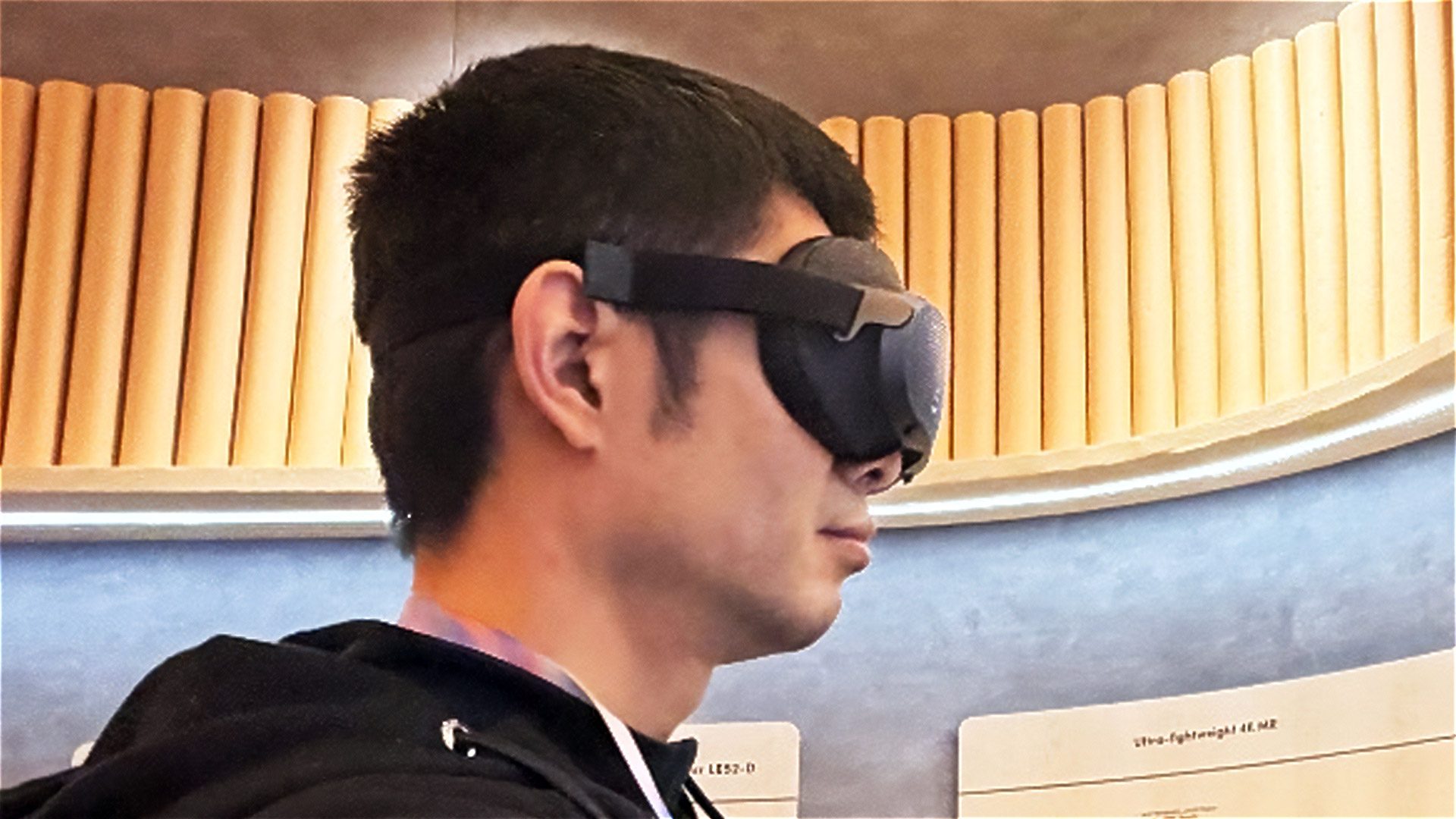
A Chinese company which mass produces many of the best known headsets in the industry has shared a new compact MR headset reference design which sets expectations for 2026.
Goertek is a little-known but massively important player in the XR industry. The company is a key enabler in the production of XR headsets as it provides reference designs which function as blueprints for consumer companies to build headsets, and handles mass production for some of the best known headsets in the industry.
At CES 2026, Goertek revealed its latest MR headset reference design. Reference designs like this act as a blueprint for any company that wants to put their own spin on the device and take it to market. Rather than a prototype—which might use novel materials or techniques that aren’t yet mass producible—reference designs like this represent a fully functional set of ready-to-manufacture components with tangible costs and delivery dates.
There isn’t a lot of info available on the reference design yet, except what has been officially stated by Goertek:
An Ultra-Lightweight MR Reference Design showcases system-level optimizations, reducing the weight of a 4K MR headset to approximately 100 grams. It delivers retinal-level clarity (38 PPD) within a 100-degree field of view, with Video See-Through (VST) and 6DoF [tracking].
We’ve reached out to Goertek for details, but in the meantime many questions remain.
Considering the incredible 100g weight of the headset, it seems almost certain that this reference design does not include on-board compute or battery. For comparison, Quest 3, even with a soft strap, weighs in at 515g.
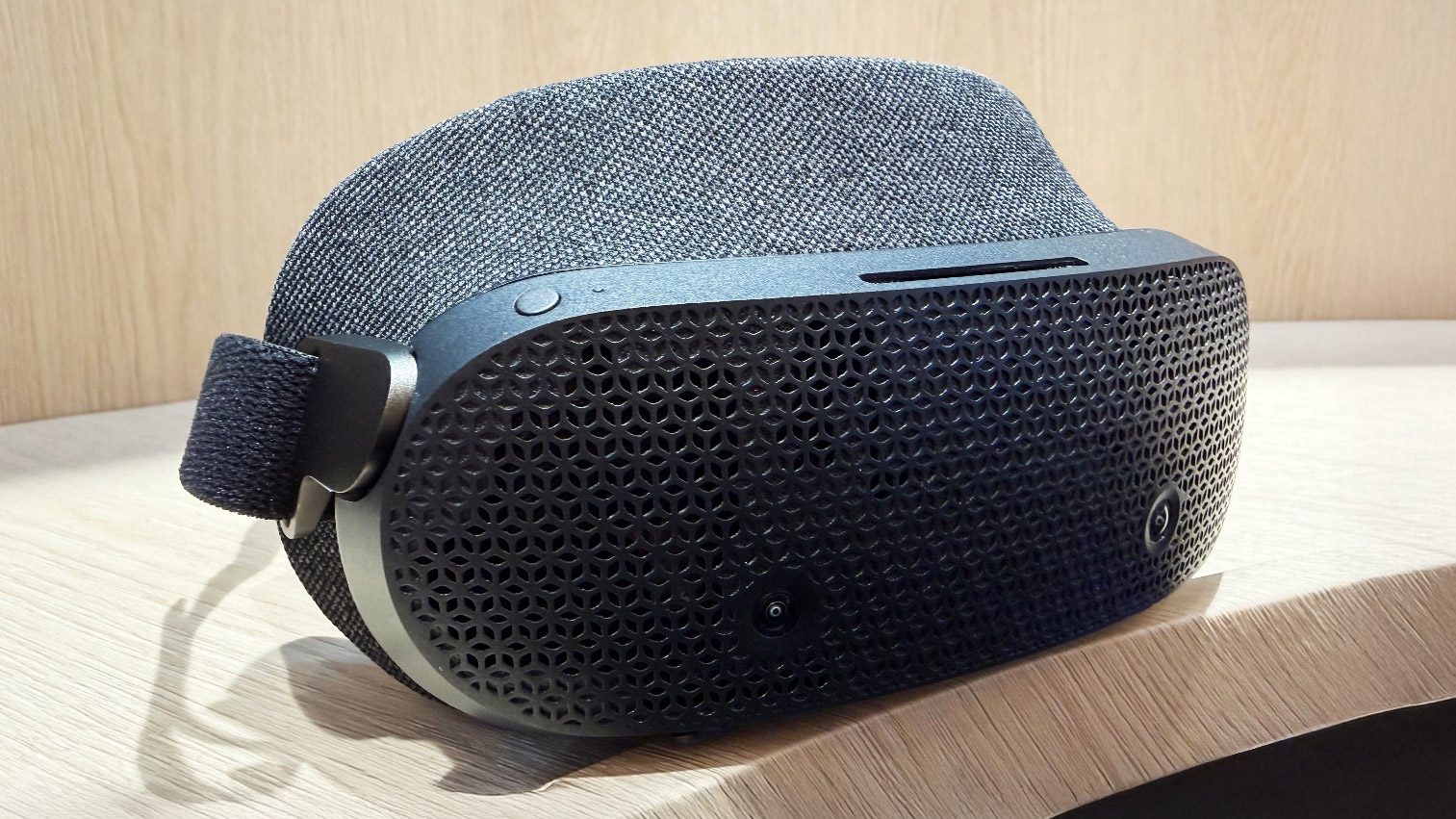
That means the headset would need to rely on a tethered compute/battery pack, or some other host device, to function. This would follow the trend of headsets like Vision Pro and Galaxy XR which both offload the battery weight to a tethered battery.
Adding to the confusion, Goertek calling the headset an “MR reference design” would generally be understood to mean a standalone device, but in the one photo we’ve been able to find of the device in use so far (courtesy CNFOL), it appears to be part of the company’s “PCVR Software Suite” display station, and looks to be tethered directly to the PC in front of the user.
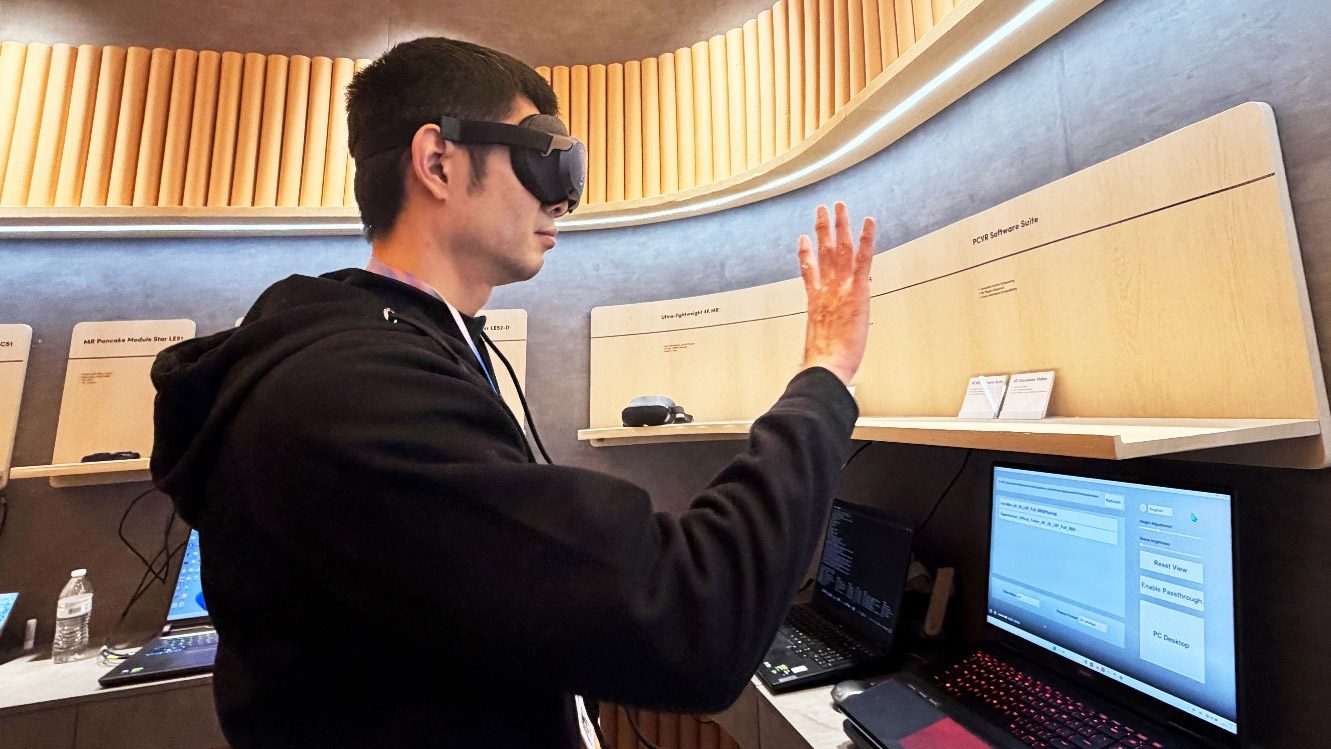
In any case, the reference design shows us what kind of resolution and field-of-view can be expected from headsets in 2026 with this compact form-factor, even if the design doesn’t have its own compute/battery.
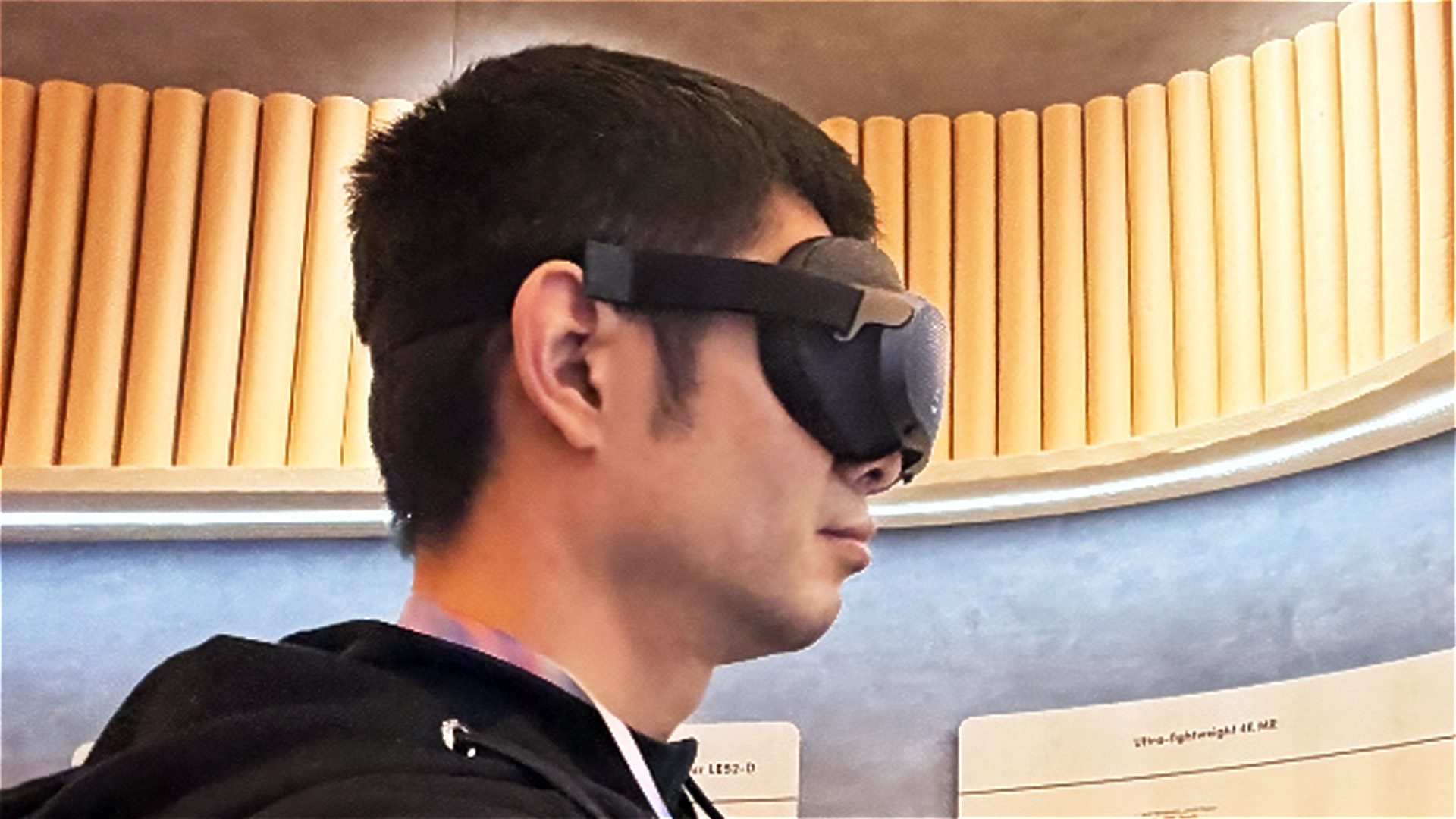
Likely the reference design is meant to show the form-factor while leaving it up to customer companies to decide if they would bring it to market as a standalone or tethered headset.
,