
South Korean eyewear brand Gentle Monster is set to launch its first pair of smart glasses this fall, and it’s hoping to make waves with a rash of new physical retail locations across North America and Europe.
The News
As reported by Maeil Business Newspaper, Gentle Monster is set to dramatically increase its overseas stores within the next five years. While Gentle Monster currently operates a total of 86 stores globally, 36 of which are in Korea, the Seoul-based company aims to open 10 more non-Korean locations by the end of this year, with plans to expand that number to a total of 200 within three to five years.
Gentle Monster’s rapid expansion outside of its Korean home turf comes at a critical moment, as the company hopes to drive global brand growth off the back of its upcoming smart glasses, the result of a partnership between Google and Samsung.
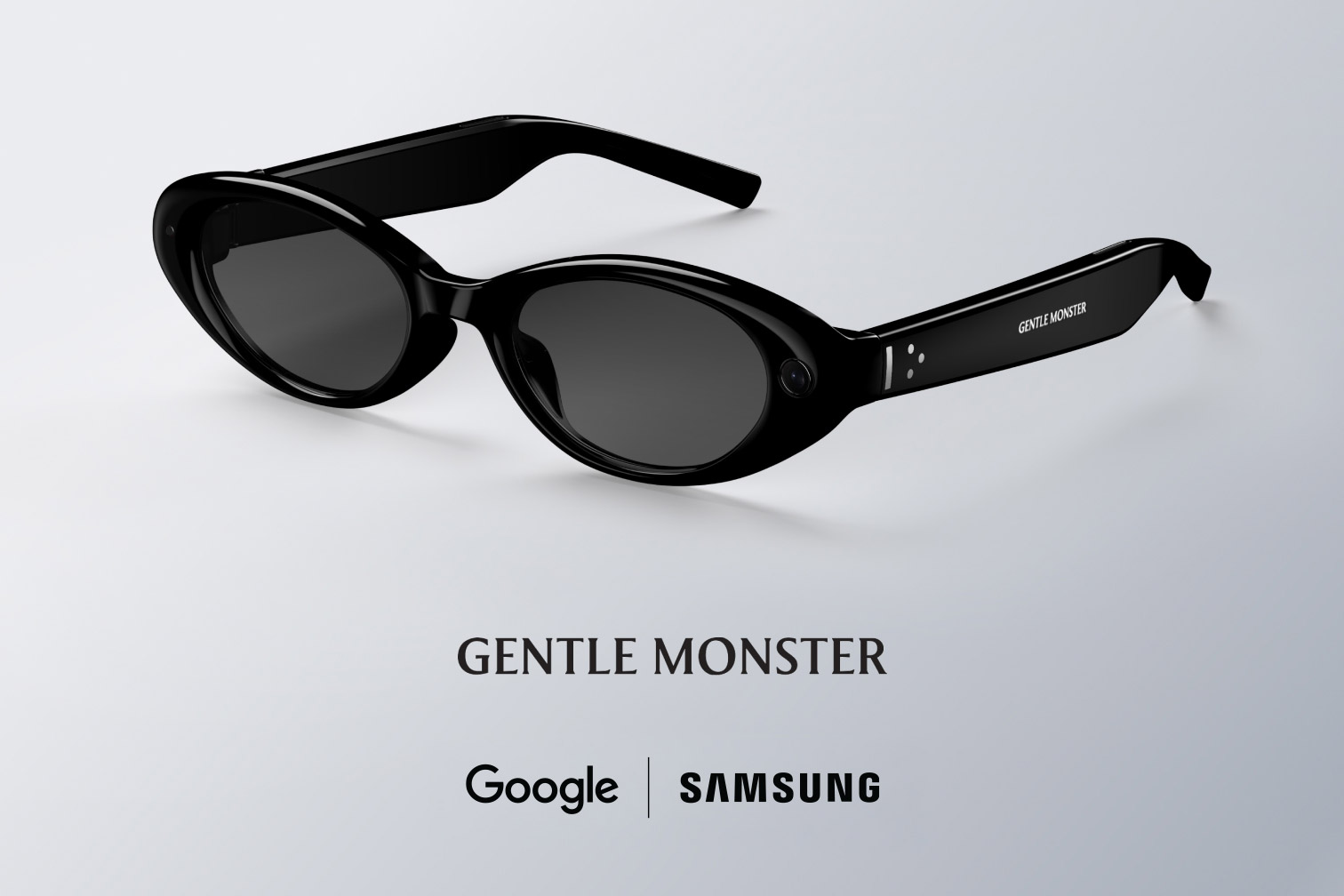
Much like Meta Ray-Ban, Gentle Monster’s smart glasses include a built-in camera for video and photo capture, audio input and output, and a a big focus on AI integration, although it will be one of the first smart glasses to run Google’s Android XR operating system and its Gemini AI.
“We plan to increase the number of North American stores from the current eight to more than 10 by the end of this year,” a Gentle Monster spokesperson told Maeil Business Newspaper. “We will actively market AI glasses to become a new growth engine in addition to existing eyewear.”
While North America and Europe are undoubtedly set to be a big focus for Gentle Monster, the company also aims to expand retail across Asia, including Korea, Japan, China, and Taiwan.
This follows a $100 million investment by Google in Gentle Monster’s parent company IICOMBINED, giving Google a 4% stake in the company.
My Take
I was wondering how Gentle Monster would appeal to the North American and European market ever since Google announced it was working with it and US-based Warby Parker. I’ve never physically seen a pair of Gentle Monster glasses outside of Asia, so I basically assumed Samsung would take the lead, physically selling both the smart glasses from Gentle Monster and Warby Parker via its comparatively larger retail presence, leaving the two smaller brands to essentially sell primarily online and at its less numerous physical locations.
It seems though the recent Google investment has given the rapidly growing K-brand reason enough to take a lead, which maybe shouldn’t be so surprising given just how well K-anything is doing nowadays.
What’s especially interesting though is that Gentle Monster appears to not only want a leadership position in the global eyewear market in general, but sees to its smart glasses as the impetus. It’s a sort of confidence I didn’t expect from the company with only one pair of smart glasses on the roster thus far, although I imagine we can expect that to change in short order if it wants to take on a growing pack of rivals.

Speaking of rivals: as the result of a long-term partnership with EssilorLuxottica, Meta has released multiple generations of Ray-Ban and now Oakley-branded smart glasses. That tight partnership may be changing though, as Meta even released its own cheaper ‘Meta Glasses’ frames, starting at $300.
Meanwhile, EssilorLuxottica seems to be making inroads to develop its own XR hardware, as the Franco-Italian eyewear giant recently partnered with Applied Materials in a long-term joint development agreement that will accelerate the commercialization of next-gen optical systems for AR and AI-powered smart glasses. EssilorLuxottica also recently acquired mixed reality headset creator Lynx, which was creating a competitor to Meta Quest.
A host of other brands have also seen the obvious growth potential for the audio-only smart glasses segment, which seems fairly logical since it’s very clearly a cheaper-to-produce accessory and not a hardware platform as such at this point; no costly displays, relatively small compute footprint, and no need for any sort of app store at this point, since it’s all about interactions with AI, taking photo/video, and using the few approved integrations, like listening to Spotify.
That said, there are also a growing number of startups eschewing cameras altogether by offering display-only glasses, such as MemoMind and Even Realities, although they admittedly feel like a niche that the biggest brands on planet Earth may skip over, as the training data alone from their camera-first, AI-flavored smart glasses is just too rich to pass up.