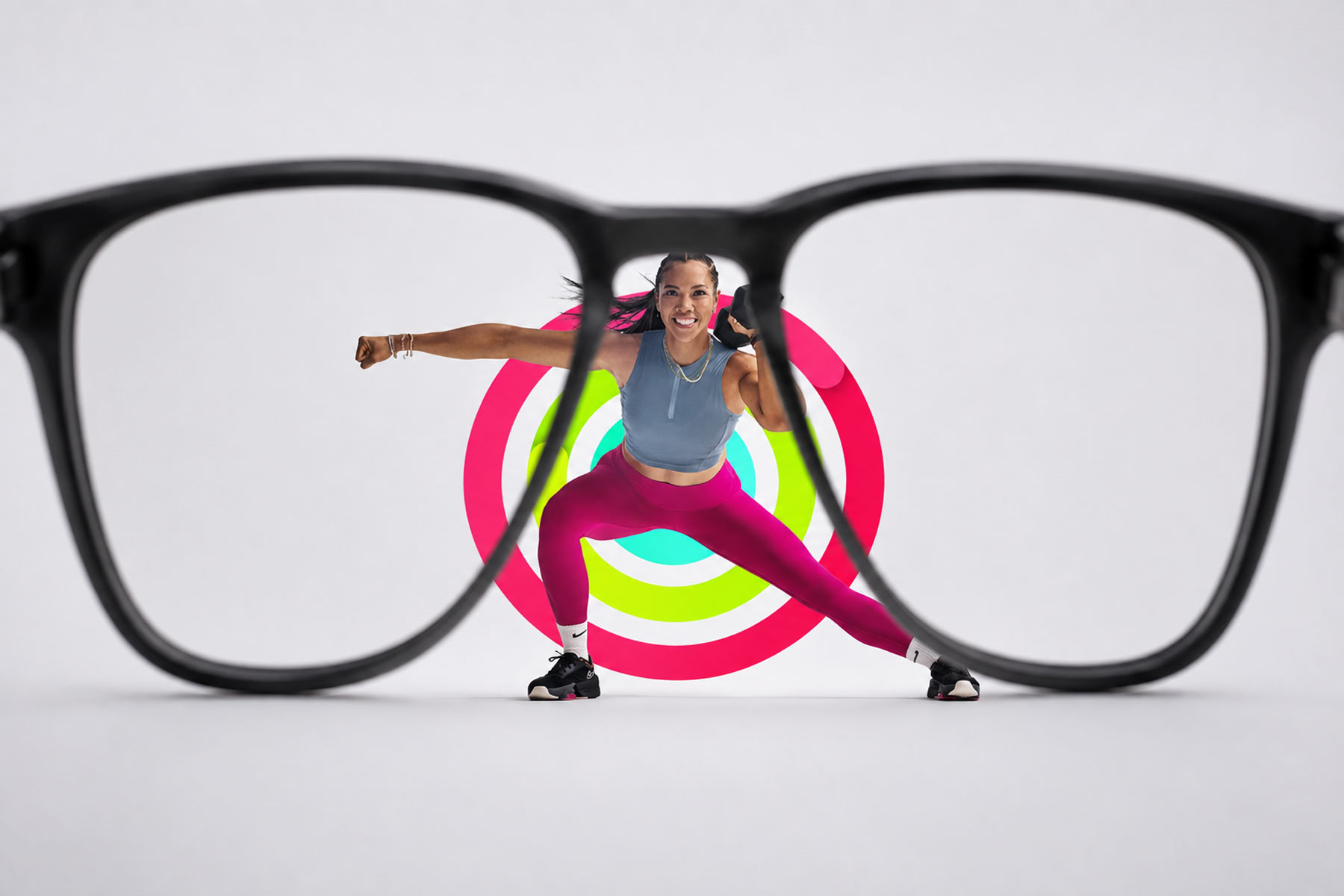
While Apple’s first-gen smart glasses aren’t expected to include fitness tracking, although a recent report suggests the company ultimately hopes to put fitness at the center of its next big product segment.
The News
According to a report from Bloomberg’s Mark Gurman, Apple is working to turn its future smart glasses and XR headsets into health and fitness devices.
As noted by Gurman, Apple initially hoped to include fitness tech in Vision Pro, which could have seen Apple Fitness+ run on the headset so users could work out while Vision Pro analyzed movements via body tracking. Vision Pro was ultimately too heavy though, so the project was reportedly abandoned.
But with Apple’s forthcoming line of smart glasses, that may change. Similar to how Apple inched AirPods into med tech by making them into ad hoc hearing aids, Apple is reportedly hoping to eventually make its smart glasses into fitness devices too, as the smart glasses will necessarily include a range of sensors that could be used to record data and analyze user movements.
As it is, Apple has posted a new job listing for a “Strategic Product Design, VPG Health & Fitness” in is Vision Products Group, responsible for R&D of its smart glasses and XR devices:
Apple’s Vision Products Group is looking for a strategic product design leader to help define the future of health, wellbeing, and fitness experiences across vision products. You will translate ambiguous opportunities at the intersection of spatial computing, wearables, consumer health, and human behavior into clear first-party product direction by identifying high-impact opportunities, shaping early concepts, defining what should be built, and helping cross-functional teams bring those experiences to life.
Granted, Gurman says he doesn’t expect the first generation of the glasses to include that level of fitness tech out of the gate, although it’s clear the company is thinking hard about how to make its smart glasses more indispensable, and expand beyond snapping photos and videos and acting as end points for AI queries.
My Take
I don’t see smart glasses alone replacing smart watches or dedicated fitness trackers, at least not so quickly. While I’m sure there must be some research into nose bridge-mounted pulse oximeters and heart rate monitors, I can’t imagine they’d be more reliable than something you wear directly on your wrist or upper arm, like you might with a Google Fitbit Air.
But as an adjunct to Apple’s fitness ecosystem, led by Apple Watch, a pair of smart glasses in the ecosystem could provide a good degree of useful body tracking info, such as counting reps, weights, treadmill settings, etc just by ‘watching’ you as you workout.

That’s the sort of live AI stuff that companies like Meta are looking into now, which has a fairly large head start with its Ray-Ban, Oakley and now own-branded Meta Glasses.
Notably, Meta announced in April it was pushing an update to its line of smart glasses that would let users track their calories by visually estimating a food’s macronutrients—essentially lightening the mental weight of having to physically look up and log a food in traditional calorie-tracking apps—which is something I’d absolutely expect both Apple and Meta to key into further with their respective smart glasses.