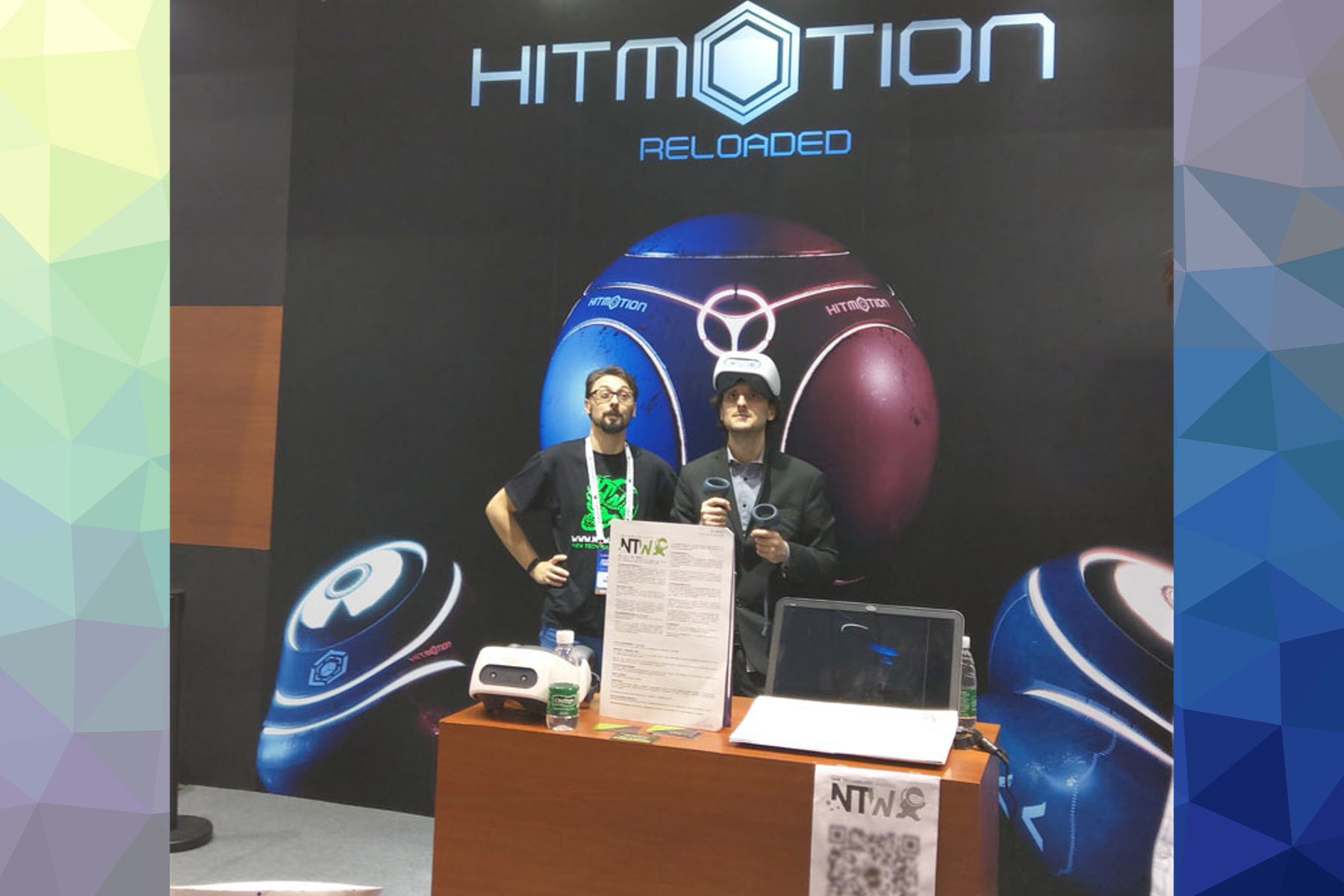
Antony ‘SkarredGhost’ Vitillo is an AR/VR entrepreneur, developer, and blogger. Most people know him for his blog The Ghost Howls, which he uses to inform the community about the latest in AR/VR. Vitillo mainly considers himself an XR software architect though, with 12 years of experience working on projects such as Jean-Michel Jarre’s New Year’s Eve concert in VRChat and HitMotion: Reloaded, the first commercial mixed reality game for a standalone headset. He has also won various accolades, like the Webby Award or the Pico Spotlight Award. Vitillo is in love with immersive realities and the communities dedicated to them.
In the field of immersive realities, there are currently two countries leading: the United States and China. While much is known about the US, there always seems to be an aura of mystery when speaking about China, at least for us outside the Great Firewall. And since I travel to China regularly and have developed many connections over the years, often people ask me for insight into the country, its XR ecosystem, and also the possibility of doing business there. I get various requests from creators who are exploring the possibility of distributing their experiences in China. China’s 1.4 billion population, 870 million of whom are between the ages of 15-59, represents a real opportunity for talented teams with good content.
In this article, I’ll give you a basic overview of a few things you should know when you consider the idea of doing business in China as a VR developer. Some is generic advice, although here’s my point of view as an XR professional.
Choose your sources of information about China wisely
Some information floating around about China here in the West is wrong or incomplete, which means you should choose the sources you can trust wisely. Or better yet, go there and see for yourself. If you trust hearsay, you might end up having a completely wrong view of how things actually work there.
In these years, I’ve read many things which were definitely not true. One of the biggest (non-XR) examples is the infamous “social score system,” this fantomatic system where every citizen has a score that goes up for every good action and down for every action against the rules. This thing is very Black Mirror, and like Black Mirror, it’s largely a work of fiction. When I explain to my Chinese friends what the social score is, they look at me like I’m a crazy guy wearing a tinfoil hat.
And like the social credit score system, the Chinese metaverse you might have heard about in online articles, almost always from Western tech media, which was said to have been built on top of WeChat, basically the country’s super app; messaging, mobile payments, games, dinner reservations, everything…no one in China has ever heard about that either, not the people working in the metaverse in China, nor the people specifically working at WeChat.
That’s only a small slice of the sort of misinformation I’ve debunked myself firsthand. Now, after many years of back-and-forth travel to China, I mostly trust information I can verify myself, or with a personal circle of friends and professionals who actually live there. I even asked one of my VR contacts in China to fact-check this article to be sure I wasn’t spreading misinformation myself.
China never had its Quest moment
If you plan on selling content in China, you should know the VR games ecosystem there is completely different from here.
China never had its “Quest moment.” It’s more than the fact that Meta isn’t allowed to sell there. Effectively, no headset has ever managed to create that combination of a good content catalogue and affordable price that made the Quest famous here. The only company that attempted to replicate Quest’s success in the consumer ecosystem was Pico, but the company seemingly switched course a few months after the release of the Pico 4. The result is that there is almost no consumer VR market. So if you made your VR hit game à la Beat Saber and you plan on selling in China, you might need to consider a different release strategy.
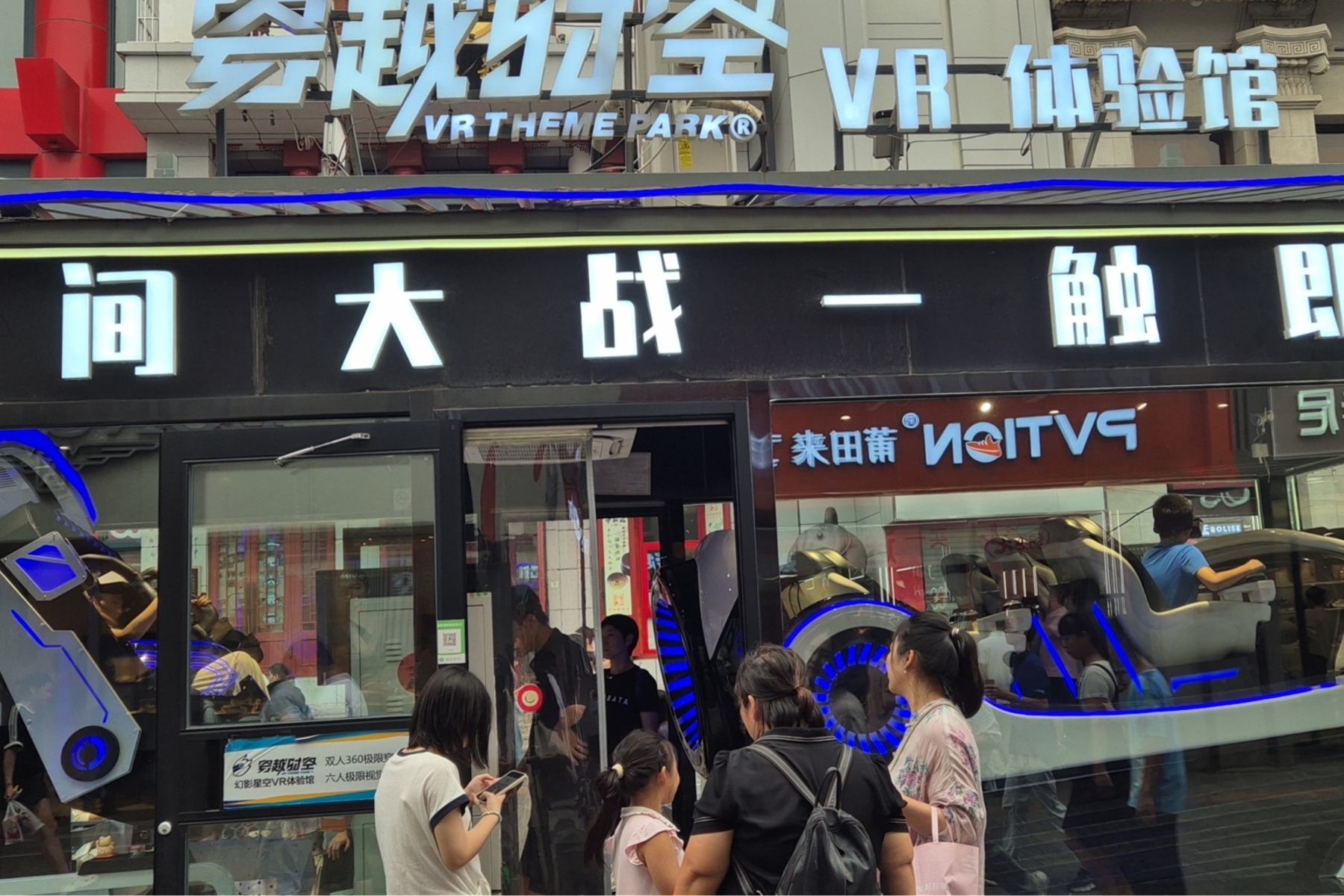
What is successful in China, like in much of East Asia are arcades, the sort of out-of-home game rooms that are perennial fixtures in the many (many) malls across the country. They are, without exaggerating, basically everywhere; not just in tech hubs like Shenzhen, but in almost all big cities. You can often find at least one in any given commercial center. And all of them have VR attractions, which can range from something as simple as a big toy car with a VR headset to a VR area where you move around shooting zombies. They’re not always the most modern VR headsets and not even the best VR games, but they are surprisingly widespread.
Courtesy Antony Vitillo
One thing that’s gained in popularity in the past years has also been large-scale VR installations. Basically, these are large rooms where multiple people play VR experiences contemporaneously. And these VR arcade-goers aren’t playing together either: everyone is playing their own solo experience, just in the same physical room as everyone else. You walk around as you play your own room-scale experience, meanwhile dodging others who are shown to you as white silhouettes so you don’t bump into each other.
The B2B market exists there, too, and it is pretty similar to here, with VR training having its own unique importance in the market. A few years ago, there were also a number of disparate regional pushes to integrate VR into schools. Just like it happened here, though, while B2B remains a decent way to make money in VR, investment has noticeably cooled there, too, as hype around consumer XR and the metaverse has seemingly vanished.
Smart Glasses and AI are the new hotness
Exactly like here in the West, while VR headsets have lost a bit of investment prestige, smart glasses are on the rise. Many companies are working on smart glasses, including major companies like Huawei and Alibaba. When I attended the VR AR Expo China in May, the most interesting exhibitors were showing smart glasses of every kind: with or without a display; for AI assistance or watching movies; general purpose or for a specific use case (e.g., swimming). Established companies like Rokid or RayNeo are offering a big lineup of devices, but many new startups are coming with various products.
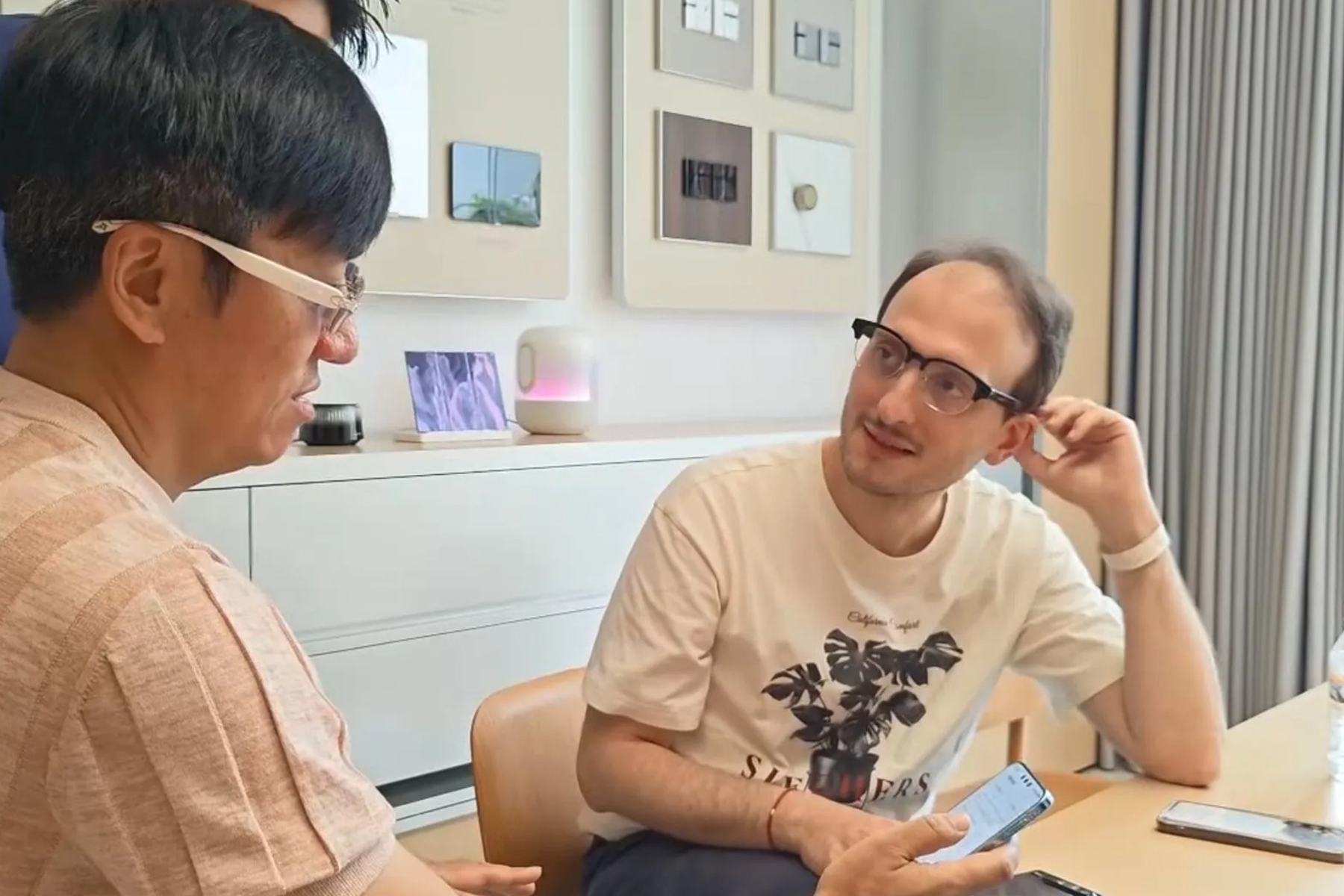
Some Chinese smart glasses definitely impressed me. The Huawei AI glasses surprised me with the quality of their photos and videos: thanks to AI enhancement, pictures always have wonderful colors and definition.
Trying Huawei AI glasses (2026) | Courtesy Antony Vitillo
Recently, Alibaba launched its smart glasses with eye tracking, which is a big innovation for the category because it allows AI to know exactly what you are looking at. But probably Rokid is the one that is ahead of the others in terms of creating a developer ecosystem, and so may offer opportunities for content creators.
Glasses are gaining relevancy because they work well with AI, which has exploded in China, too. The big corporations like ByteDance are trying to chase the frontier models of OpenAI and Anthropic: DouBao has become in China what ChatGPT is for us. And OpenClaw got super popular there, too.
For now, it’s not clear how developers can capitalize on the smart glasses push in China, although I think that’s pretty true for the West, too.
Find a local partner
If I had to choose one single suggestion to give to people looking to do business in China, I would go for this one: find a local partner, or a network of partners. A local partner knows the market, knows the regulations, knows the unwritten rules, and can help you a lot. I would avoid doing any serious business in China without having some local support. You risk too much: you may publish a type of content people don’t like; or you may go against some rules and be banned; or you may not be able to market your content properly. A local partner may also help you with IP protection.
There are companies which are specialized in exactly this: they can take your Quest VR game, modify it to please a Chinese audience, and help you distribute and market it inside Mainland China. This may require re-adapting your game to be used inside arcade rooms instead of home settings. It may also require modifying the game to satisfy the many regulations there are in the sector. In case your content gets plagiarized, these companies may help, too.
Various accelerators and incubators welcome Western entrepreneurs who want to open an office in China and help them navigate the complexities of the Chinese tech ecosystem. In some places, there are also regional funds and/or free/cheap office spaces for entrepreneurs who want to move their business to China. For instance, this year, when I visited the VR video studio FXG, company CEO Nikk Mitchell introduced me to a pretty nice incubator in Hangzhou that was very happy to help Western entrepreneurs wanting to move to the region.
You can’t do that alone, so look for local help. But be sure to find a partner you can really trust, so maybe ask someone you trust to introduce you to a potential partner they can vouch for.
The suggestion of having a local partner also extends to having a local network of people you know who can help you with every problem or can create opportunities. For instance, I’m always thankful to Nikk for having supported me with issues I had while there.
This may sound obvious, but it’s a question I field far too often. When you want to distribute your content in China, it had better be in Chinese. English may be the closest thing we have to a universal language in the West, but not in China. And that goes for every type of content: if you are making a game, distribute it in Chinese; if you are making a presentation, at least translate the slides into Chinese, and eventually bring a translator on stage; if you are making videos for social media, add Chinese subtitles.
For instance, when I wanted to share in China the interview I did with Road to VR’s executive editor Scott Hayden at Meta Connect, I did it with the support of VR AR World (a trusted local partner!), which added Chinese subtitles and then shared it on Chinese social media. Here’s that subtitled version which I re-hosted on YouTube:
AI is making communication with Chinese people easier. Events are adding automatic translations, for instance. But AI-mediated communication is still clunky and inexact (Apple Vision Pro was translated as “Apple WeChat Pro” during an event… and I’m not telling you what AI translated when the Pimax CEO went on stage saying he was looking for [business] partners…), so it’s still advisable to have someone who speaks Mandarin.
That’s especially true if you have a booth at an event, as having a Mandarin speaker is indispensable for the quick face-to-face interactions that would otherwise be slower and more awkward when translating through a smartphone. And as with all languages, in Chinese, communication isn’t only about translating sentences, but it’s also about knowing what to say and how to say it, interpreting feedback, and understanding what any given reaction actually means.
When I was showcasing the boxing game HitMotion: Reloaded together with my business partner Massimiliano Ariani in Nanchang back in 2019, our partner HTC kindly provided us with a Chinese volunteer who could help us tell people how to wear the headset and play our game. She was super valuable and helpful.
And it was even more helpful when a Chinese friend told us that we were doing everything wrong by showcasing the game with the full tutorial. In the beginning, I thought it was nonsense, because without a tutorial, the game was simply too hard to explain. But then I realized that she was right: people were getting bored pretty quickly by playing the tutorial, so we started skipping the tutorial and letting them just start punching stuff like Rocky Balboa. After this, feedback was much more enthusiastic. That day I understood how important it is to trust what a local is saying. As I’ve said, it’s not only about the language, but it’s also about the culture, tastes, and subtleties. A local friend or partner has this sort of knowledge on tap and can dispense it more easily and verifiably than ChatGPT…
A different market with different rules…
China is a market with its own rules. Competition is incredibly fierce: if you publish a successful product, cheaper clones popping up like mushrooms are sure to follow. And competition rules are also harder to enforce. IP protection in China is more complicated, and not something I can get into great detail here, but if you do something good, expect to have to fight to protect it. Again, a local partner is a key resource: while people in the West think there is no way to protect patents in China, you can see real results if you have a strong local partner who knows the ins and outs of Chinese intellectual property law and can especially navigate its legal system.
Competition is an integral part of Chinese society: usually when an interesting product comes to the market, there is an explosion of companies working on it, all trying to compete with the others to be the few that will “win” the market in the end. This is where we are now with smart glasses. An incredible number of companies are offering them, and many look the same and are functionally similar, too. In the end, very few will actually survive despite their best efforts.
There are also some practices which are common in China but not in the West. A few months ago, there was a “scandal” about Pimax promising perks in exchange for positive reviews of its headsets. Many people on Reddit were shocked by this practice, called “astroturfing,” which is even illegal in some states. In China, I would say it is pretty normal: in many places you can get a free drink or some other free gift in exchange for a five-star review. As an outsider, it’s not important whether you think this practice is wrong or right; it is what it is. And you have to adapt to the rules of the market if you want your business to survive. When in Rome…
… and a different speed
“One month in Shenzhen is equal to three months in Europe.” I heard this sentence in a TV documentary once, and I can say it’s basically the case. In China, speed is of paramount importance, and this is of course connected to the above point about competition. If you have many competitors and they are all going fast, you’d better have good tennis shoes if you don’t want competition to steamroll you.
Speed is endemic in everything in Chinese society. I always jokingly say, “In Italy, if I say ‘I’ll do it later,’ it may actually mean an indefinite period between two minutes and two years, while in China it must happen in the next 59 seconds.” Planning meetings, signing documents, delivering… everything should happen as quickly as possible. Conditions change fast, and you have to react. For instance, when we were launching HitMotion: Reloaded at the Vive Ecosystem Conference, we discovered that just the day before there was a firmware update that effectively broke our game. We had to operate very quickly to fix it, and only thanks to that rush did we manage to launch our game in time.
Different channels for your promotion
You have to resort to different outlets from the ones you use in the West. I’ll avoid the usual example of WeChat instead of WhatsApp to talk more directly about examples in our field.
If you want to promote your games or products, forget about Reddit or YouTube. You have to resort to DouYin (which is TikTok), which is incredibly popular, or videos on Bilibili, which is a video-sharing platform. Then, of course, there is WeChat and various other platforms dedicated to the Chinese market (Weibo, etc.). Not to repeat myself, but if you have a local partner, they can advise you which mix of platforms to use to promote your content.
There are a number of dedicated VR publications practically unknown outside China, such as Vrtuoluo, which is one of the leading publications there, VR AR World, or Yivian. Also, the VR influencers are not the ones you know here: for instance, a good friend of mine is DannieVR, a Chinese creator who also has a small presence on YouTube, but is mostly active on Chinese social media, and is known by essentially all of the major XR manufacturers there.
As for the events, I attend VR AR Expo China in Shanghai every year, which is strongly dedicated to XR. But there are other events about gaming, like ChinaJoy, where you can still find some VR attractions. Augmented World Expo (AWE) has an Asian chapter, which has just returned to China.
Different integrations required
While maybe not the main concern for XR devs looking to distribute their content in China, it’s also important to note that China has a world of different app integrations. For example, when I visited Alibaba in Hangzhou, I got a chance to try on the company’s Qwen smart glasses. When I inquired about their unique value proposition amid the flood of competition, I was told they had the best integration with the whole Alibaba ecosystem: Amap (Chinese Google Maps), Alipay (payment service), Taobao (Chinese Amazon), etc. In China, this is actually huge, because these are services that hundreds of millions of people use every day. If Alibaba wanted to release Qwen outside of China, that value proposition would evaporate.
Conversely, the value proposition of your app or hardware evaporates in China if you don’t integrate it with a variety of these services. For instance, you should make it easy to share videos on DouYin and to make payments through WeChat Pay and Alipay, and apps must absolutely have some sort of built-in QR code reader.
Regulations
China has a ton of regulations about games that you should know if you want to publish your game there. Beyond some of the more commonly known rules (for instance, you can’t show red blood or gore in general in Chinese games), player data also needs to stay in China.
That’s precisely why many service providers have dedicated servers there. When I was working on a VR platform for concerts years ago, I discovered that Photon, the cloud-based networking platform and SDK (widely considered the gold standard for multiplayer games) has dedicated separate servers for Chinese players.
Many platforms “hide” the difficulties of the various regulations by essentially acting as mediators: I published some minor VR content through Viveport in the past and never had issues. If there is something to change, it is the platforms that ask for it directly, although you should be cautious about publishing politically sensitive material, violence, sexual content, etc., as all of it could need changing as a result of Chinese National Press and Publication Administration (NPPA) rules. And very special care should be given to content for children, because the government wants them to study more and play less.
In general, a good local publisher can help you go through the regulation process more easily.
BONUS: Don’t trust Chinese on spiciness levels…
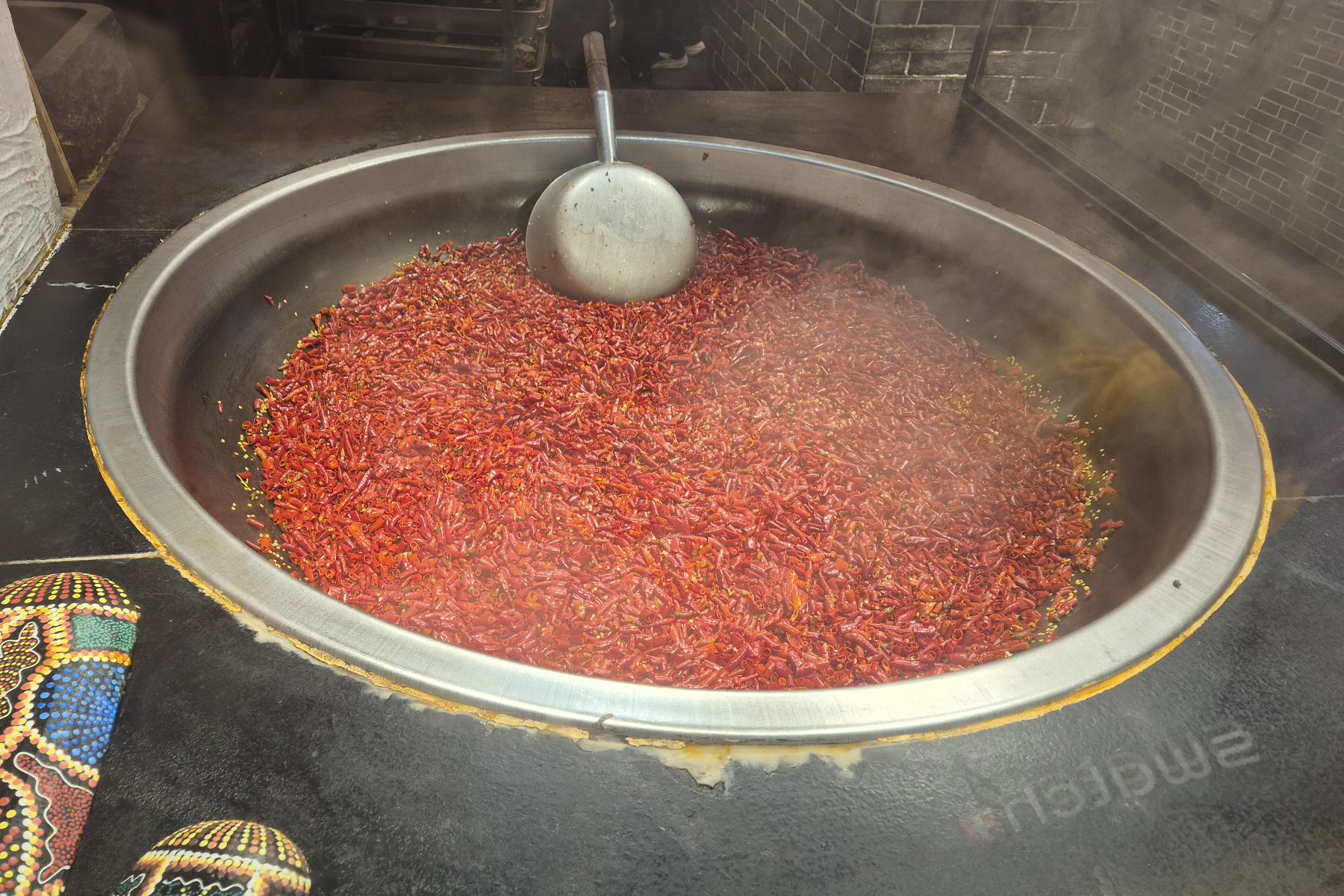
Bonus piece of advice: if you’re doing business in China, never trust a Chinese person on the spiciness of food. I was once having a one-on-one lunch meeting, and I clearly asked for non-spicy food. The other person ordered a bowl of soup for me, guaranteeing I would have loved it. When I started eating, I started crying and sweating because it was super hot. I told the guy, “Sorry, man, this is killing me; it is very spicy,” and he calmly answered, “Is it? I can’t feel it at all.” The guy could probably use a flamethrower on his tongue and not notice it.
The lesson I learned is this: just like deciding on what information you can trust or not, always verify the food for yourself first, too. Take a tiny bite first and see how spicy it is before committing to the whole bowl!
For Chinese standards, this is probably just a bit spicy | Courtesy Antony Vitillo
These are just a few things that I learned over the years and that you should consider if you want to launch your products, or even move your company there.
That said, there are a ton of other things, too, but this article is already dangerously close to becoming a book. If you want to go deeper and have some help with doing VR business in China, feel free to get in touch, and we may discuss it while drinking some (non-spicy) bubble tea.
We use cookies to ensure that we give you the best experience on our website. If you continue to use this site we will assume that you are happy with it.