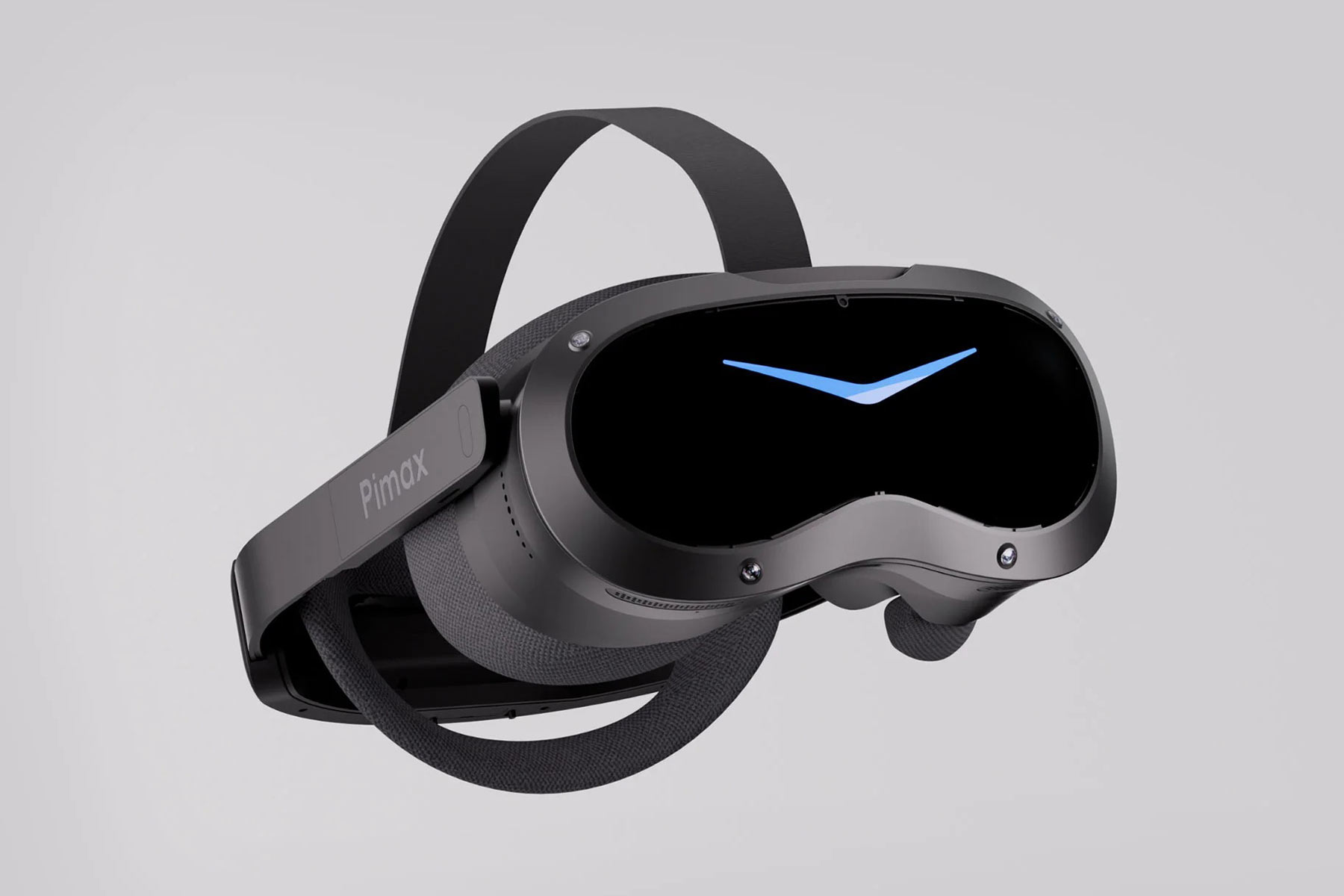
Pimax announced its next major VR headset, Crystal Pro, which not only boasts high-fidelity PC VR streaming, but also some native standalone gameplay too.
Much like Steam Frame, Crystal Pro’s major focus is on wireless PC VR streaming, which Pimax says is built around its own Native Foveated Streaming tech.
PC VR streaming can be done via the included Wi-Fi 6E adapter, although the headset also supports an optional 60G AirLink kit, which uses a two-antenna, 2×2 multi-input multi-output (MIMO) design on the 60GHz band.
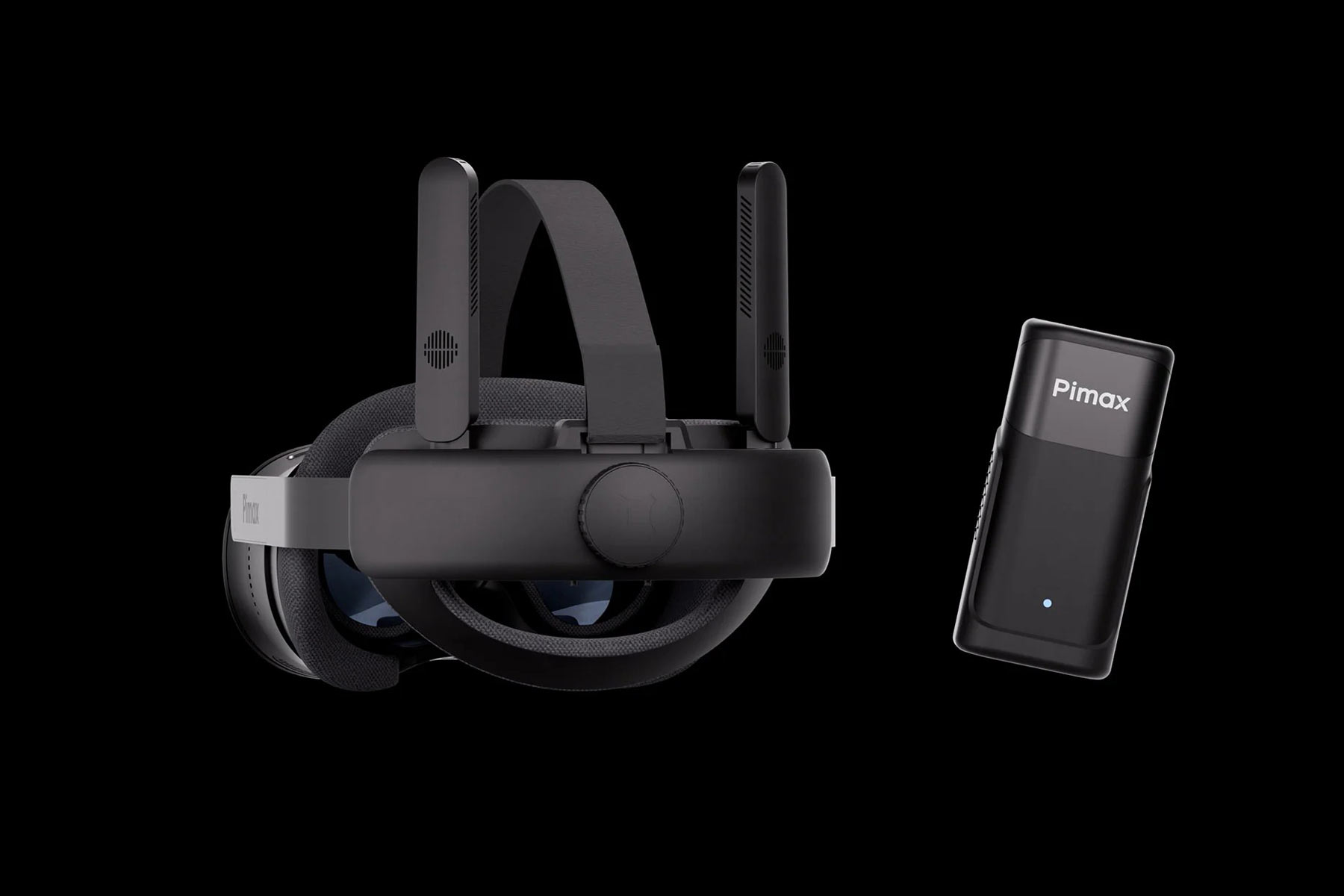
Pimax says it’s capable of sending the GPU’s native, uncompressed image directly to the panels in the user’s focus area, at up to 6 Gbps and under 2ms of added latency.
In addition to PC VR streaming, Crystal Pro runs both OpenXR mobile VR titles and Android applications natively, provided they can run on the headset’s Qualcomm Snapdragon XR2 Gen 1 chipset, which is notably the same in the 2019-era Meta Quest 2.
Pimax Crystal Pro is slated to ship sometime next year, priced at $1,399. The third gen 60G AirLink is priced at $599. When bundled together, the whole package costs $1,899. You can reserve Crystal Pro now for a non-refundable $1 fee.
When it does arrive, the box will contain the Crystal Pro headset, two ringed SLAM controllers, a 16,000mAh external battery pack, and a Wi-Fi 6E adapter.
Check out the specs below:
- Optics and display: Aspheric glass lenses paired with quantum-dot LCD (QLED) display panels at 2,880 x 2,880 pixels per eye (~17 million pixels total), a 110° horizontal field of view, 35 pixels per degree, refresh rates of 72/90/120Hz, Mini-LED local dimming with 576 zones per eye, and 200 nits of brightness.
- Eye-tracking: Integrated Omnivision eye-tracking with ten infrared emitters per eye, sampling at 120Hz, used for both dynamic foveated rendering and, with the 60G AirLink kit installed, foveated streaming.
- Tracking: Pimax SLAM 2.0 inside-out tracking, combining four cameras, a motion sensor, and infrared illumination for low-light tracking. A swappable faceplate adds optional Lighthouse base-station support; an optional MR faceplate adds full-color passthrough with LiDAR depth sensing.
- Power and connectivity: No battery is built into the headset; power is supplied by the included 16,000mAh external battery pack. An optional DisplayPort 1.4a cable connection is also available for wired PC VR use.
- Onboard Chipset: Qualcomm Snapdragon XR2 Gen1 (same as Quest 2)
- Comfort: A rigid backstrap design, a magnetically attached facemask and foam interface, adjustable eye relief, three remappable buttons, three microphones, and off-ear speakers, with optional DMAS 2.0 earphones.
- Modularity: Swappable faceplate, backstrap, audio components, and lens inserts.
- GPU Recommend: RTX 3080 / RTX 4070 or above
- GPU Requirement: RTX 2070 or above
Ringless Controllers & Spation Mini-PC
The company also announced its Ringless VR Controllers, which use hand tracking from the headset’s cameras, combined with an infrared-LED and motion-sensor tracking system, in place of the tracking ring used on earlier Pimax controllers.
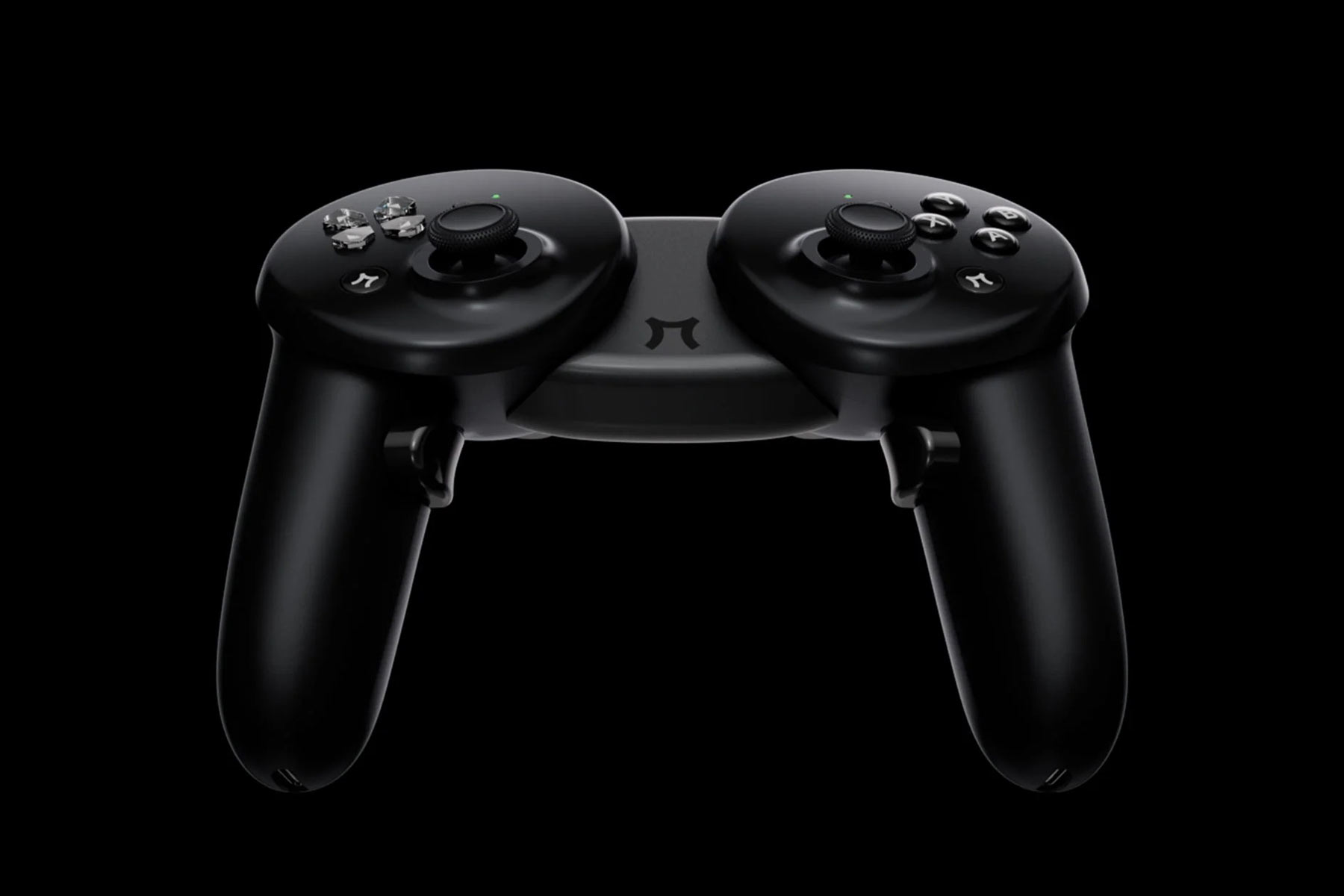
It allows for full 6DOF motion controllers for PC VR, but also a standard wireless gamepad for Windows and Steam when clipped together with an included pin.
Each controller includes a TMR joystick, grip and trigger buttons, a menu button, and a linear haptic motor. A 710mAh battery, charged via USB-C, is rated for up to 40 hours of use per charge, Pimax says.
Additionally, Pimax is putting out a Steam Machine-style mini-PC, which it calls the Spation. Here’s a quick look at the specs, although there’s no price or release date yet.
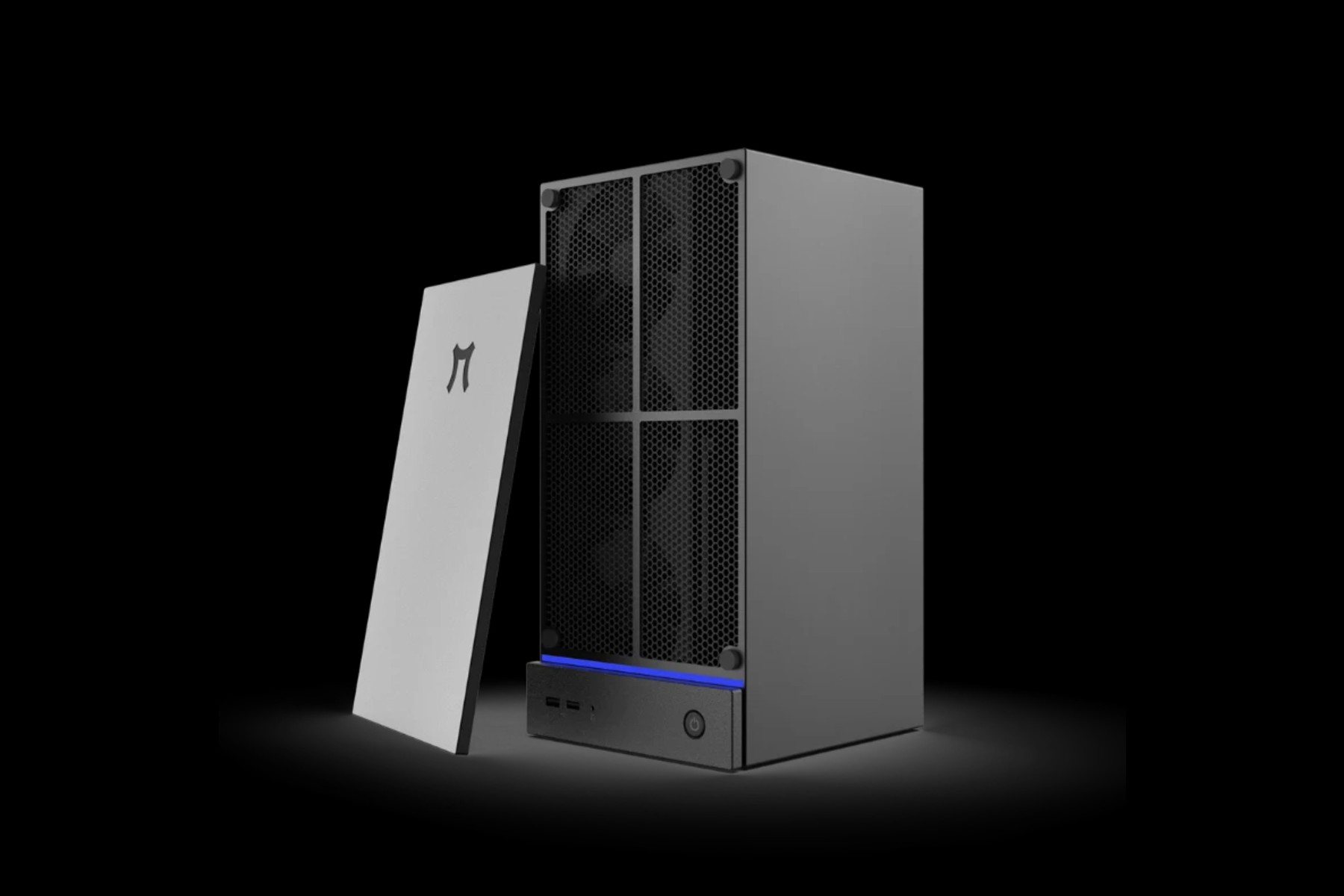
Compute
- CPU: AMD Ryzen 7 9800X3D (or equiv.)
- GPU: AMD RX 9070 XT or Nvidia RTX 5070 Ti
- Memory: 32GB DDR5-6000 (16GB × 2)
- Storage: 1TB PCIe 5.0 NVMe SSD
- Power: 1000W SFX power supply
Connectivity
- 1 × USB4 (Type-C) + 6 × USB 3.2 Gen 2 (Type-A)
- Wi-Fi 7, Bluetooth 5.4, 2.5G Ethernet
- 2 × DisplayPort 2.1 + 1 × HDMI 2.1 + 1 × USB-C DisplayPort 1.4a
In the meantime, you can catch Pimax’s full product presentation here: