
If you’re comfortable mucking around with a new open source project, you could be shopping on Amazon just by looking at an object with your Ray-Ban Meta smart glasses.
Ray-Ban Meta smart glasses are pretty useful out of the box, offering photo & video capture, calls, music playback, and your standard assortment of AI chatbot stuff. They don’t have an app store though, which means you’re basically stuck with a handful of curated services.
Now, indie developer Sean Liu released an open-source project called VisionClaw that links Ray-Ban Meta smart glasses with OpenClaw (aka ClawdBot), essentially giving the autonomous AI agent eyes and ears.
Check out VisionClaw in action below, courtesy Liu:
now my clawdbot lives in my ray-ban meta glasses so i can just buy whatever i’m looking at pic.twitter.com/gWrijyTRhE
— xiaoan (@_seanliu) February 6, 2026
OpenClaw isn’t an AI model like ChatGPT or Google Gemini though. It’s an agentic layer—essentially a complex messaging layer built on top of an AI model that interacts with services on your behalf, like sending emails, managing shopping lists, or controlling smart home devices—just three of the 56+ tools OpenClaw can integrate with right now.
Basically, it works like this: VisionClaw uses Gemini Live for real-time voice and computer vision, which can do things like describe what you’re seeing and answer questions—basically the same sort of tasks you can do with the glasses’ native Meta AI.
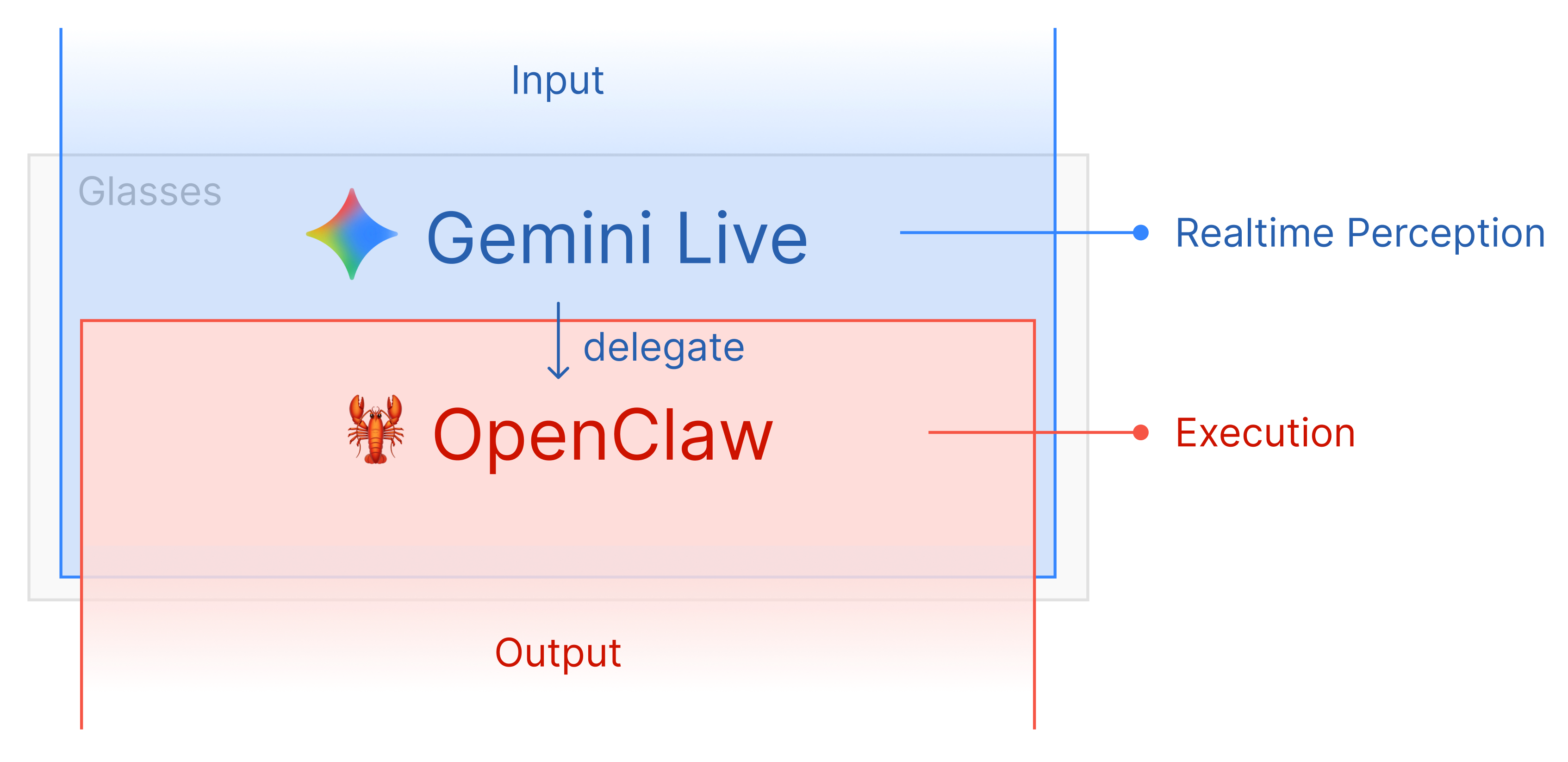
But once you want to actually interact with an app or service—like when you want to send a message over email or your favorite non-Meta messaging app like Signal or Telegram—Gemini Live hands off the request to OpenClaw, which takes action.
Users looking to run VisionClaw will need an iPhone, as Liu’s codebase is written as an Xcode/Swift app that specifically uses Meta’s Wearables Device Access Toolkit (DAT) for iOS to connect the phone to Ray-Ban Meta glasses.
Beyond that, you’ll also need a fair understanding of the risks involved with running OpenClaw on your personal hardware.
While it can do some pretty amazing things, it’s a third-party bit of software that could require you to input passwords, API keys, and personal information, which can open the user up to malicious actors. Notably, OpenClaw’s skill integrations could be written by anyone, so users need to be especially vigilant.
,